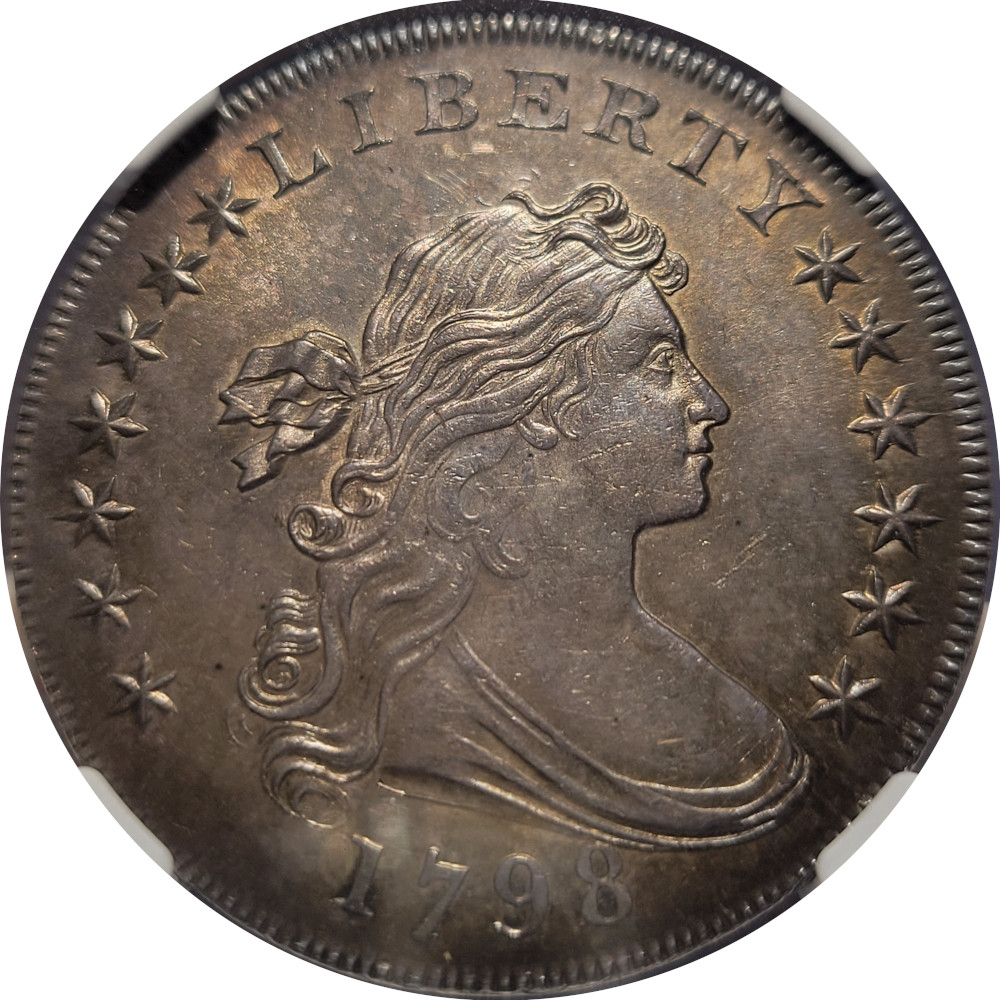
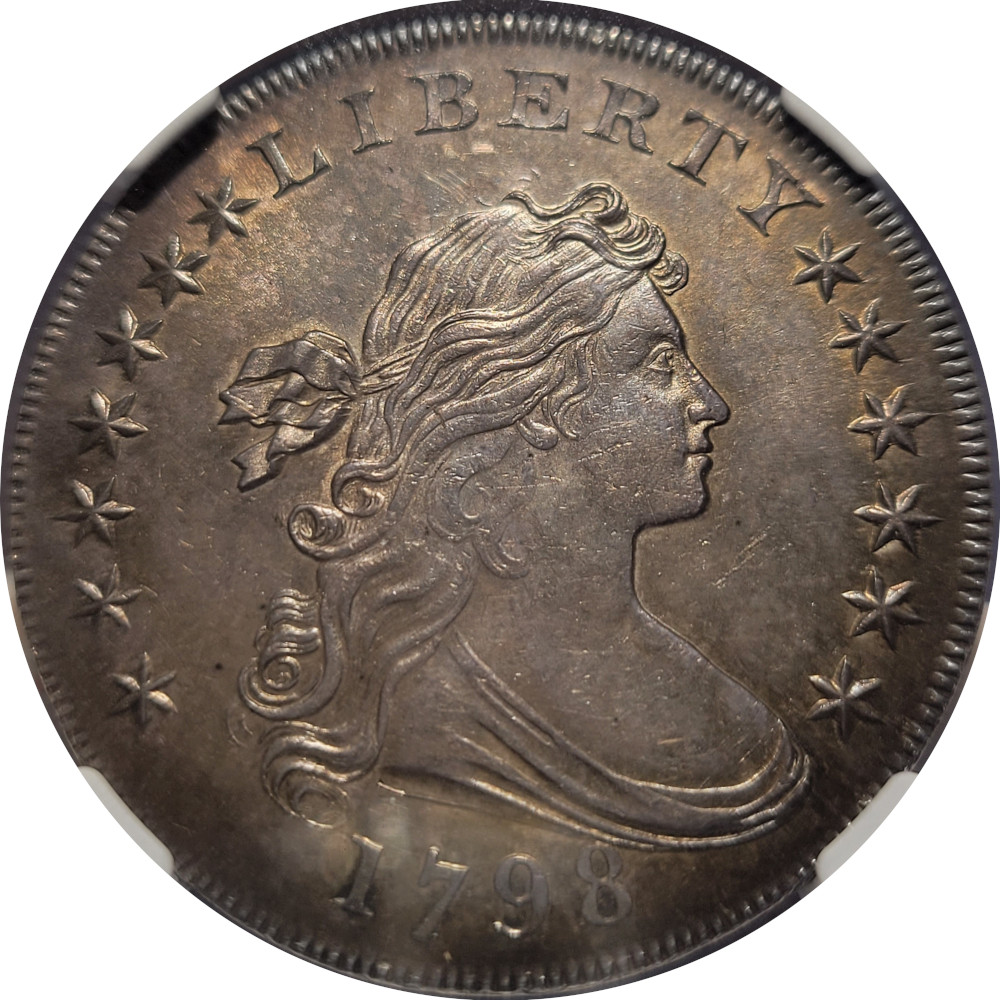
1798 $1 Draped Bust Silver Dollar Heraldic Eagle B-23, BB-105, R-3 NGC MS62
$ 96.69
1798 $1 Draped Bust Silver Dollar Heraldic Eagle Bolender 23, Bowers-Borkhardt 105, NGC MS62. The Small Eagle reverse was retired in 1798, in favor of the Large, or Heraldic Eagle design, and the 13-star obverse was firmly standardized during the year. According to Mint records, a large mintage of 327,536 silver dollars was accomplished in 1798, including both Large and Small Eagle varieties. Q. David Bowers believes only about 235,000 coins were struck from 1798-dated dies, however, the rest being struck from dies of prior dates as an economy measure. The Mint was reluctant to discard any dies that were still usable for coinage, and the change to the 13-star obverse and Large Eagle reverse meant many earlier dies would no longer reflect the current style, so the Mint probably struck as many coins as they could with the old dies before those changes took effect. Probably no more than 35,000 1798-dated Small Eagle dollars were produced and 200,000 examples of the new Heraldic Eagle style were struck. Two die varieties are known for the Small Eagle dollars, while a whopping 31 die combinations have been identified for the Heraldic Eagle type. The present coin represents the BB-105 variety, with a Pointed 9 in the widely spaced date and an arc-star pattern on the reverse. The obverse die was previously used to strike the BB-104 variety of this date, while the reverse die was later used to produce the BB-106 variety (this usage was noted as early as 1881 by Captain John W. Haseltine and John Colvin Randall). The BB-105 is an available variety, with an estimated surviving population of 850-1,500 examples in all grades. Most examples seen are in lower grades, however, and Mint State specimens are rare.
Related products
-
Add to WishlistAdd to Wishlist
-
Add to WishlistAdd to Wishlist
-
Add to WishlistAdd to Wishlist
-
Add to WishlistAdd to Wishlist